

Can Weighted Vests Help With ADHD? Here's What Research Shows!
Table of Contents:
- Identifying ADHD Sensory Seeking Symptoms: Why Your Child Can’t Sit Still
- The Science Behind the Calming Vest for ADHD: The Deep Pressure Therapy (DPT)
- Key Benefits of Wearing a Weighted Vest for Children with ADHD
- Does the Research Support the Use of an ADHD Vest?
- Best Practices: How to Safely Use a Weighted Vest for Kids
- Why the Outree Weighted Vest is a Top Choice for Families
- Beyond the Vest: Exploring Alternative Deep Pressure Options
Introduction:
For many neurodivergent children, the world often feels loud, "floaty," or physically disorganized. This constant state of sensory dysregulation occurs when the brain doesn't receive enough physical feedback from the body, making it nearly impossible for a child to settle into tasks or feel secure in their surroundings.
In this guide, we’ll explore whether a calming vest for adhd can provide a grounding "anchor." We will look at the benefits of wearing a weighted vest, address common questions about safety and research, and help you decide if an adhd vest—like the ones we’ve meticulously designed at Outree—is the right tool for your child’s sensory toolkit.
Identifying ADHD Sensory Seeking Symptoms: Why Your Child Can’t Sit Still
For many children diagnosed with ADHD, the inability to remain still is not a matter of defiance or a lack of discipline; it is a neurological drive for proprioceptive input, which is often referred to as sensory seeking. When a child’s nervous system does not receive adequate feedback from their muscles and joints, the brain compensates by seeking out intense physical sensations. This physiological need creates what many specialists and parents describe as a "motor that never turns off," where the child is in a constant state of motion to feel regulated and "present" in their own body.
Recognizing these neuro-behavioral patterns is the first step toward effective sensory regulation:
- The "Leaner": Your child constantly leans their full body weight against you, or "crashes" into sofas and pillows just to feel where their body ends and the world begins.
- The "Constant Hum": They are in perpetual motion—swinging legs, tapping pencils, or rocking in their chair—not to be defiant, but because they are "sensory seeking."
- The Schoolwork Wall: They can’t seem to "settle" into a task. Ten minutes of homework feels like an hour-long battle of fidgeting and lost focus.
- The Morning Wrap: They wake up and immediately wrap themselves tightly in a blanket, seeking that "squeeze" to feel regulated for the day ahead.
These behaviors are often signs of a hungry proprioceptive system. When a child's brain isn't getting enough feedback from their muscles and joints, they feel untethered. This is where a weighted vest for kids can step in, acting as a physical "grounding wire" for their nervous system.
The Science Behind the Calming Vest for ADHD: The Deep Pressure Therapy (DPT)
DPT refers to the application of firm, distributed tactile sensory input—similar to the sensation of a firm hug, swaddling, or massage. For a neurodivergent child, this pressure acts as a vital communication tool between the skin, the muscles, and the brain.
The science suggests that firm but gentle pressure stimulates the parasympathetic nervous system—the part of the brain responsible for "rest and digest." When a child wears an adhd calming vest, the weight provides a constant, predictable stream of sensory information to the brain. This input helps shift the body out of a "fight or flight" state, lowering the heart rate and promoting a sense of security. It’s the physical equivalent of a deep, calming breath.

Key Benefits of Wearing a Weighted Vest for Children with ADHD
Providing a "Sensory Anchor" for Focus
Real-world feedback from classrooms shows that an adhd vest can act as a bridge to concentration. By providing the body with the "heavy" input it craves, the brain no longer has to work so hard to manage fidgeting. This often results in longer "on-task" time during reading, math, or dinner.
Taming the Transition "Storm"
Transitions—like moving from the playground back to the classroom—are notorious triggers for ADHD meltdowns. Wearing a weighted vest for kids during these shifts can provide a stabilizing force, making the "arousal drop" less jarring and helping the child stay emotionally regulated.
A Tool for Self-Advocacy
One of the most profound benefits is when a child begins to recognize their own needs. We often hear of children who, when feeling "revved up" or overstimulated, will proactively go to their closet and ask for their "heavy vest" because they know it makes them feel safe.
Does the Research Support the Use of an ADHD Vest?
If you look at the clinical research, you’ll find a mix of results. Some studies show a dramatic increase in focus, while others suggest the effects are subtle.
However, occupational therapists (OTs) often point out that the success of a weighted vest is highly individual. It isn't a "magic pill" for every child, but for those who are "sensory seekers" (the ones who love big hugs and heavy blankets), the results are often life-changing. The consensus among the community is clear: while it may not work for everyone, for the right sensory profile, it is an indispensable tool for daily regulation.
Best Practices: How to Safely Use a Weighted Vest for Kids
To ensure the vest remains an effective tool rather than just "extra weight," follow these community-vetted tips:
- The 10% Gold Standard: Safety is paramount. The total weight of the vest should generally be 5% to 10% of your child’s body weight. It should feel like a firm hug, not a heavy burden.
- Avoid "Sensory Habituation": The brain is incredibly good at adapting. If a child wears a vest all day, the brain begins to treat the weight as "background noise," and the calming effect disappears. The most effective strategy is the 20-30 minute cycle: wear it for a focused task, then take it off to let the nervous system "reset."
- Listen to the Child: Never force a child to wear a vest. It should always be a supportive tool that they find comforting.

Why the Outree Weighted Vest is a Top Choice for Families
Outree combines clinical effectiveness with kid-friendly comfort. We’ve designed our adhd calming vest to be a practical, daily tool that kids actually enjoy wearing.
- Fully Customizable Weights: Each vest includes 6 removable weight bags (two 0.5 lbs and four 0.25 lbs). his allows you to precisely dial in the weight to follow the "10% rule" as your child grows or their sensory needs change.
- A Tailored, Adjustable Fit: With adjustable length and bust dimensions, this weighted vest for kids is not a "one-time" purchase. It is designed to fit various body types comfortably and can be adjusted as your child grows, ensuring they receive consistent, snug compression year after year.
- Breathable "Anti-Overheat" Design: Crafted from high-quality neoprene, our vest features a mesh design on the front, back, and sides. This maximizes airflow, preventing the overheating that often triggers irritability in sensory-sensitive children.
Beyond the Vest: Exploring Alternative Deep Pressure Options
Not every child enjoys the feeling of weight on their shoulders. If your child is "clothing sensitive" but still craves pressure, Outree offers other science-backed solutions:

1. Outree Animal Weighted Lap Blanket
- Adorable Emotional Support: Available in various designs including dogs, rabbits, and bears, these blankets serve as both a therapeutic tool and a comforting companion.
- Heatable for Extra Soothing: The inner lining is filled with natural tourmaline, which can be heated in the microwave. This combines deep pressure with thermotherapy to relax stiff muscles and soothe anxiety.
- Practical & Evenly Weighted: At 4.5 lbs, the weight is evenly distributed to prevent bunching. Plus, the removable cover is fully washable, making it easy to keep clean after daily use.

2. Outree Sensory Peapod Chair
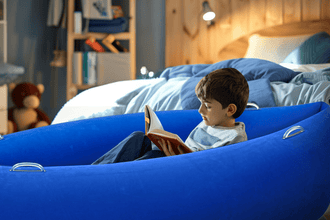
- The Ultimate "Cozy Squeeze": Once inflated, the chair wraps around the child, providing a firm, consistent "hug from behind." This intense pressure input helps alleviate anxiety and ushers in a sense of security.
- Skin-Friendly Flocking Texture: The surface features a velvety, soft-touch flocking that is gentle on sensitive skin, enhancing the overall calming experience.
- Safe and Sturdy Construction: Designed with reinforced, tear-resistant connections, this pod is built to last. It supports up to 200 lbs and is ideal for children aged 3-15 (and even smaller adults), providing a durable "safe space" for years of use.
Conclusion:
Navigating ADHD is a journey of discovery. While there is no one-size-fits-all solution, tools like a calming vest for adhd, a weighted lap animal, or a sensory peapod chair are powerful assets. They provide the physical "anchors" that help neurodivergent children feel secure, focused, and happy in a world that often feels overwhelming.
Ready to find the perfect fit for your child's sensory toolkit? Explore the full Outree Sensory Collection today >>

If your child is a sensory seeker, you've likely seen the pea pod chair. But is it just an expensive air balloon o...

Learn how bubble tubes create a visual anchor to calm anxiety, improve focus, and provide gentle stimulation. This...